Resources

Guides, tutorials, and insights to help you master observability.

Why Isn't Autovacuum Keeping Up? The Vacuum Advisor and the xmin Horizon
Blog

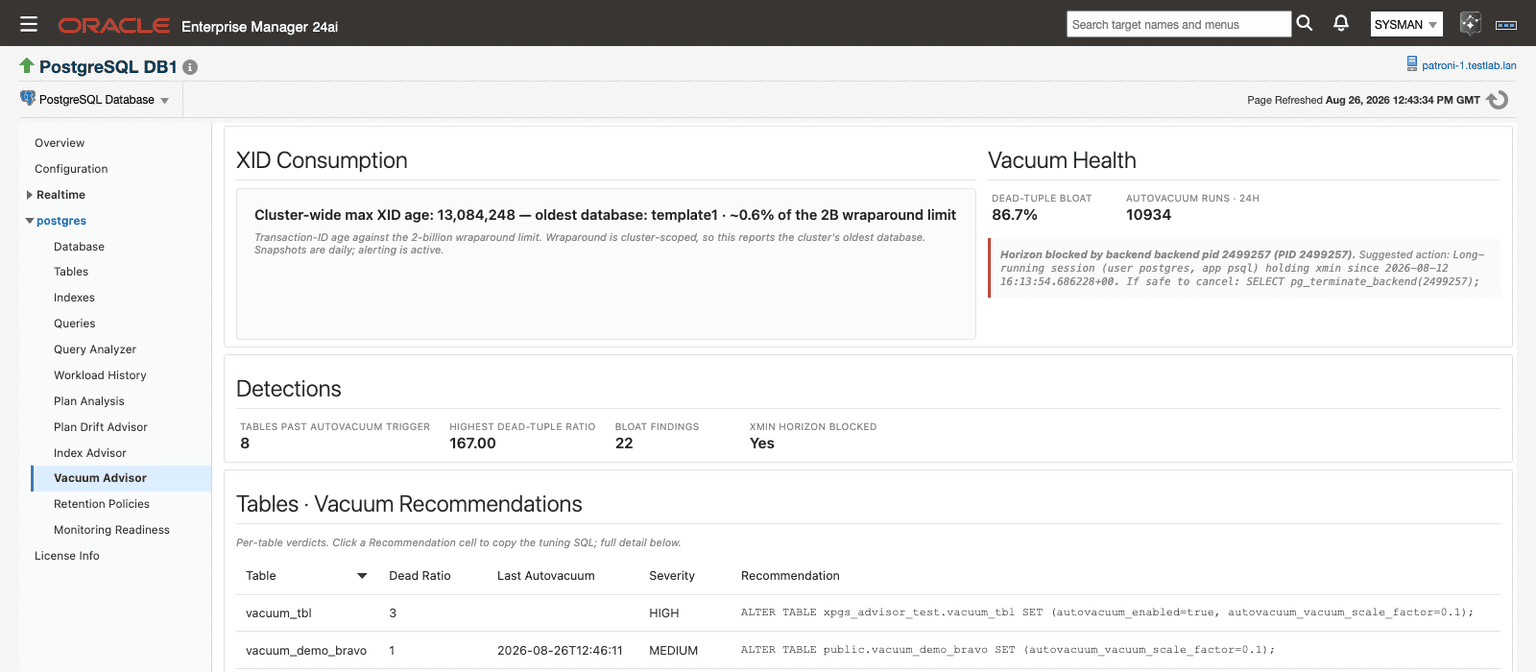
Why Isn't Autovacuum Keeping Up? The Vacuum Advisor and the xmin Horizon

When a table keeps growing while autovacuum is running, the cause is usually one of three things: the table's own storage parameters moved its trigger point, cleanup runs too rarely for the churn, or something is holding the transaction horizon so no vacuum can remove dead rows. The Vacuum Advisor recomputes each table's trigger point from its effective settings, estimates avoidable growth with pgstattuple, names whatever is holding the xmin horizon with the command that releases it, and tracks transaction-ID age against the wraparound limit. Part three of four on the advisory features in the PostgreSQL Plug-in for Oracle Enterprise Manager.

Oct 2, 2026
This Week in OpenTelemetry: September 25, 2026
Blog

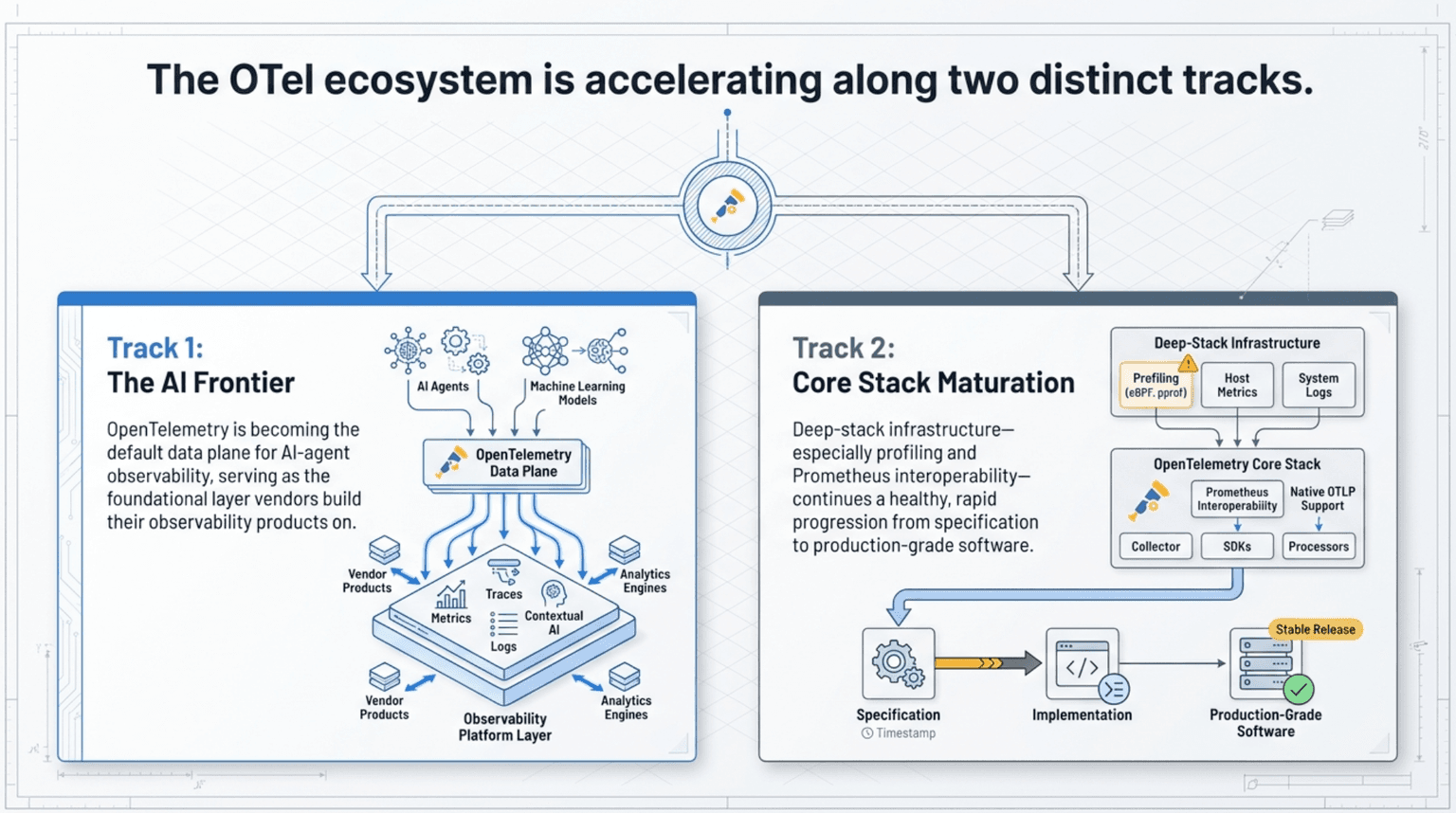
This Week in OpenTelemetry: September 25, 2026

GitHub brought OpenTelemetry export to the Copilot app and AWS launched CloudWatch Omni on top of it, both on September 22. The 2026 Prometheus/OpenTelemetry interoperability survey shows the two getting measurably easier to run together, JavaScript SDK 3.0 is scheduled for September 30, and the GenAI semantic conventions keep moving. Plus a closer look at profiling, where the eBPF profiler is turning the alpha Profiles signal into working software.

Sep 25, 2026

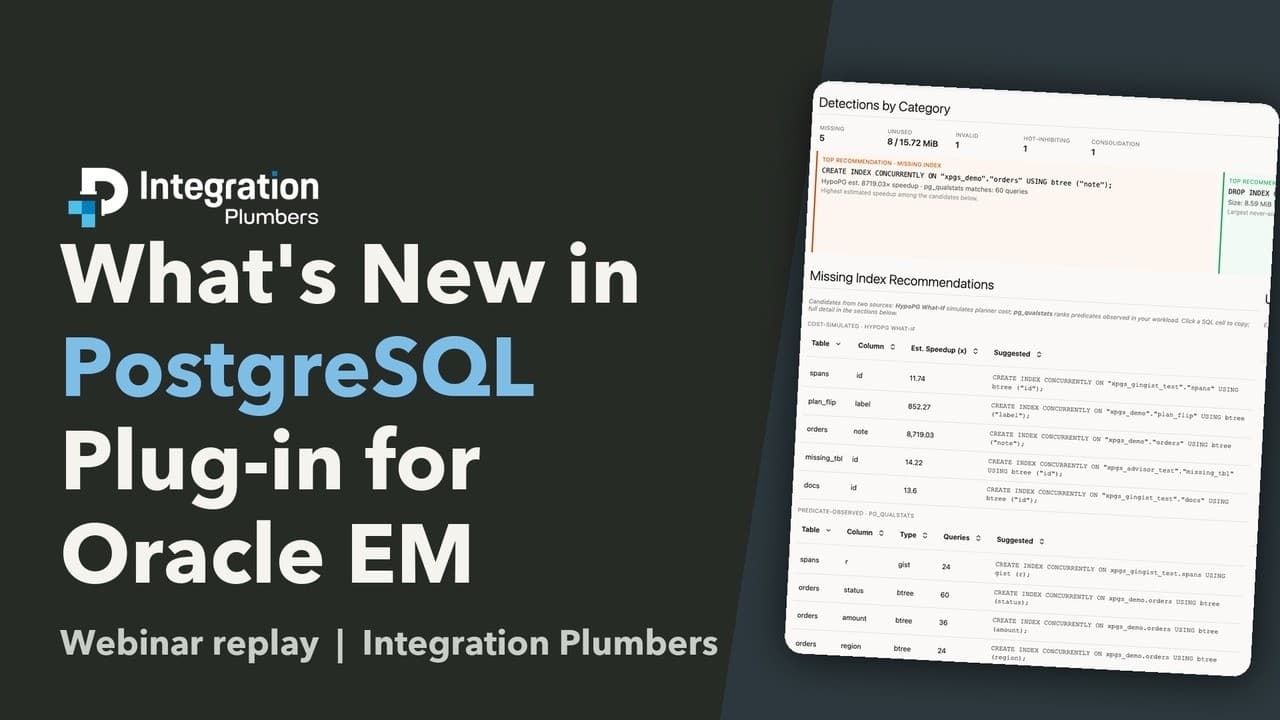
Webinar – What's New with the PostgreSQL Plug-in for Oracle Enterprise Manager
▶
Webinar

Webinar – What's New with the PostgreSQL Plug-in for Oracle Enterprise Manager

Recorded September 23, 2026. Plan Analysis, the Plan Drift Advisor, the Index Advisor, the Vacuum Advisor, and Workload History, demonstrated live in the Enterprise Manager 24ai console, plus how their findings become Enterprise Manager alerts.

Sep 23, 2026

Is This Query Still Running the Baseline Plan? Plan Analysis and the Plan Drift Advisor
Blog

Is This Query Still Running the Baseline Plan? Plan Analysis and the Plan Drift Advisor

When a query that was fine last week turns slow, the evidence you need is the plan it actually ran, and that plan is usually gone by the time anyone looks. Plan Analysis keeps it, captured by auto_explain during the query's own execution with nothing re-run, and checks it against five detection rules. The Plan Drift Advisor keeps each query's accepted baseline plans and tells you when a query leaves them. Part two of four on the advisory features in the PostgreSQL Plug-in for Oracle Enterprise Manager.

Sep 21, 2026

A VDDK-Independent Stack for Migrating VMware Workloads
Blog

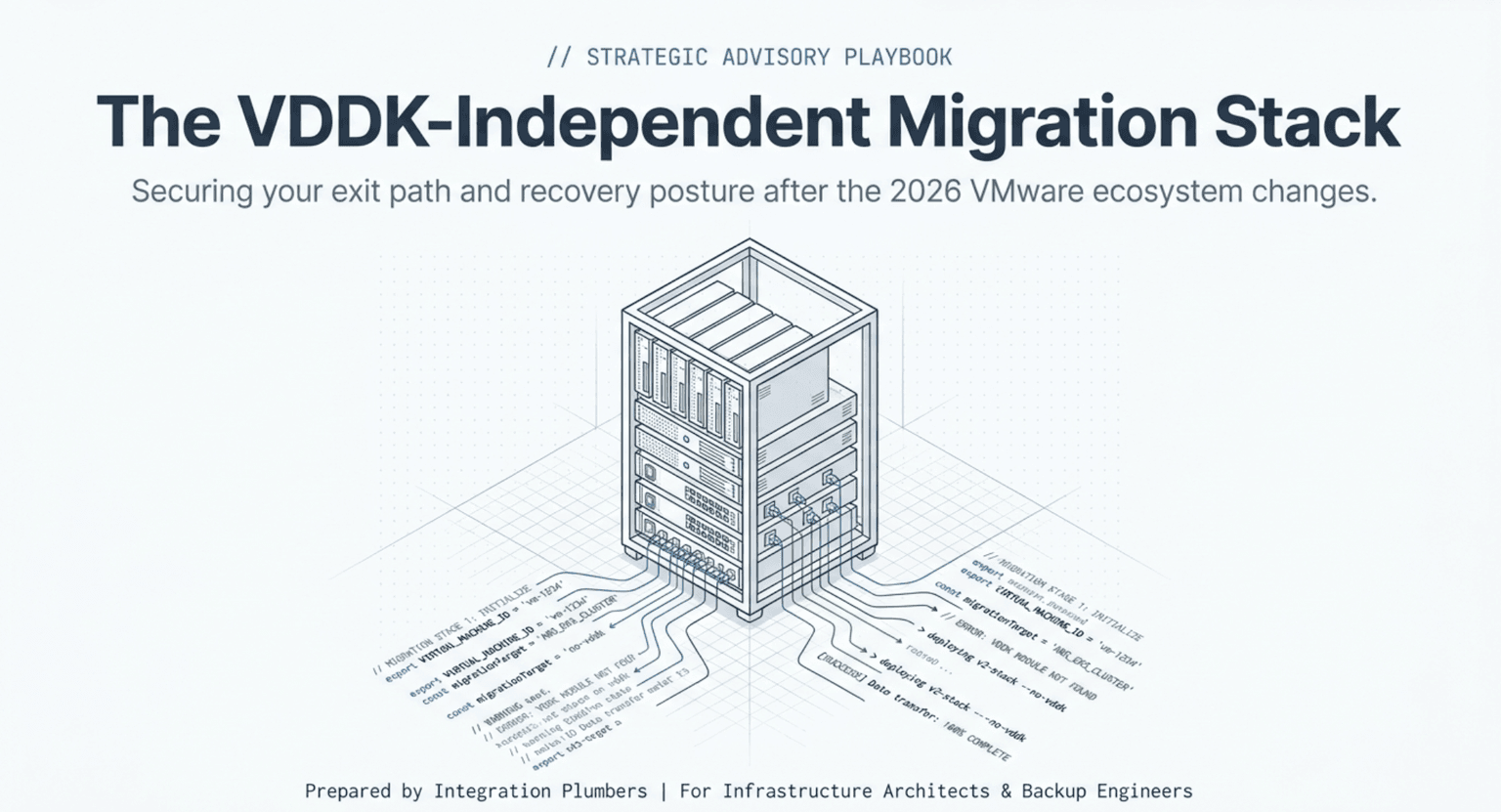
A VDDK-Independent Stack for Migrating VMware Workloads

In late August 2026, every public download page for VMware's Virtual Disk Development Kit started returning a 404, with no deprecation notice and no replacement. Your backups are almost certainly fine, because the vendors who need VDDK bundle it inside their own installers. Your exit is what got harder, and VMware has now said in public that migrating to another platform is not a licensed use of the library. Here are four guest-level approaches that remove the dependency, the real trade-offs of each, and the four practices that decide whether any of them work.

Sep 11, 2026

Which Index Should You Actually Create? HypoPG, pg_qualstats, and the PostgreSQL Index Advisor
Blog

Which Index Should You Actually Create? HypoPG, pg_qualstats, and the PostgreSQL Index Advisor

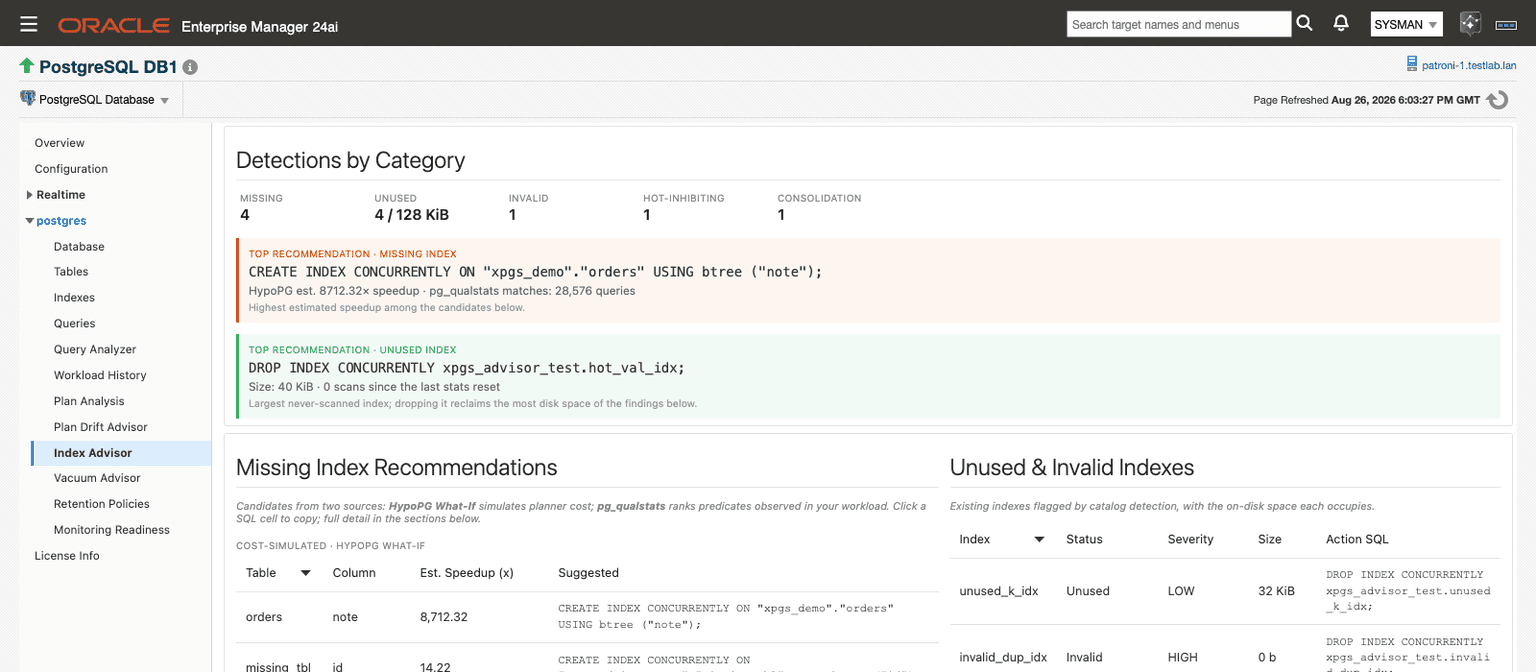
Most index advice is a hunch with a table name attached: this table gets scanned a lot, so maybe index something on it. The Index Advisor in the August 2026 release of the PostgreSQL Plug-in for Oracle Enterprise Manager replaces the hunch with two kinds of evidence. HypoPG prices a candidate index by planning against it without building it, and pg_qualstats reports the predicates your workload actually ran that no index served. Part one of four on the release's advisory features: how each layer works, where each one stops, why they deliberately disagree, and what it takes to install them.

Sep 9, 2026

Now in Open Beta: MySQL, SQL Server, and Db2 Plug-ins for Oracle Enterprise Manager
Blog

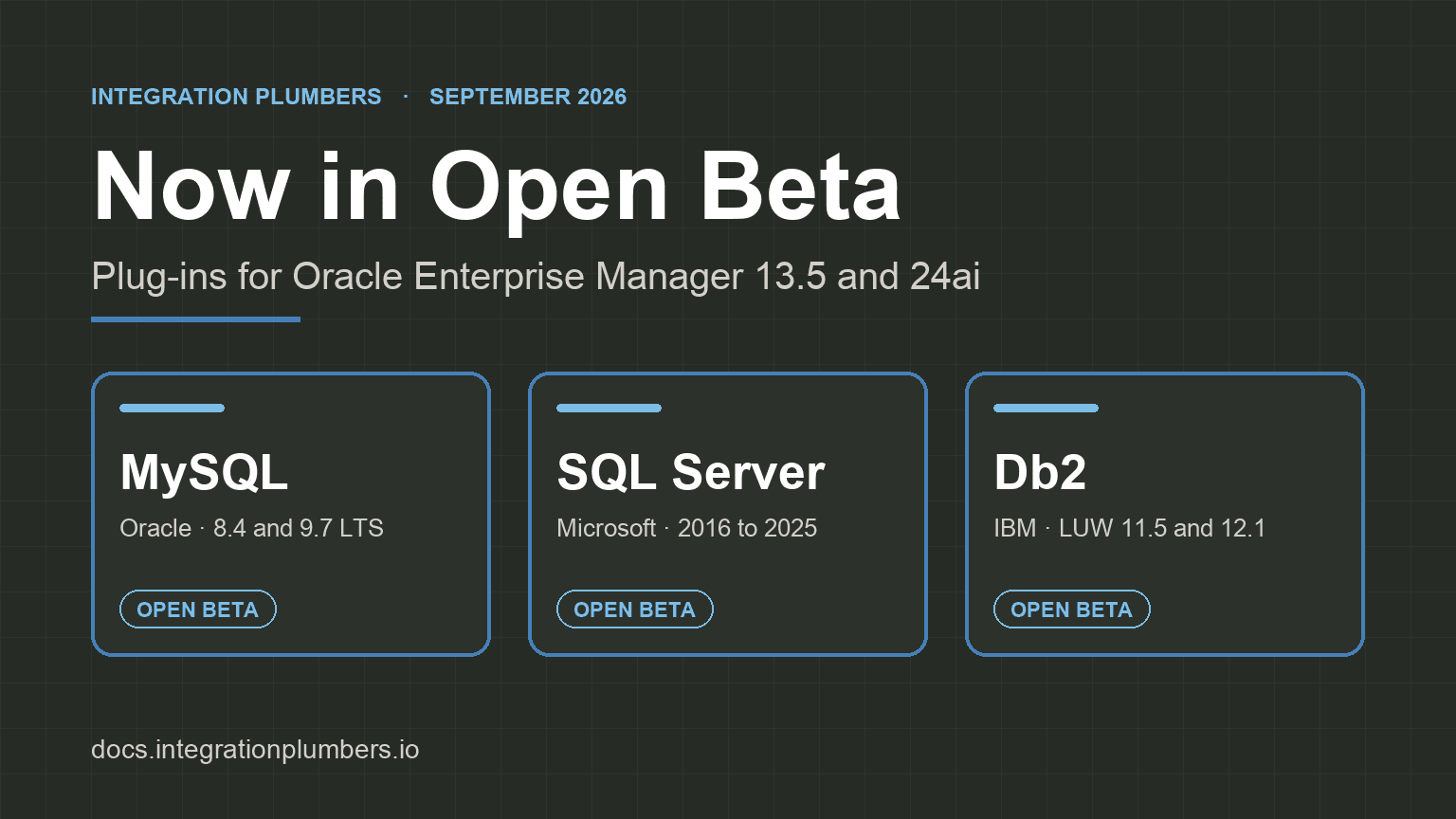
Now in Open Beta: MySQL, SQL Server, and Db2 Plug-ins for Oracle Enterprise Manager

As of September 1, 2026, all three Integration Plumbers database plug-ins for Oracle Enterprise Manager are in Open Beta: MySQL, Microsoft SQL Server, and IBM Db2. Each one makes its engine a first-class target in the console you already run, collects with a read-only account over an encrypted connection, and ships thresholds and compliance rules that work on day one. Here's what each plug-in covers, what Open Beta means in practice, and the four steps to get a license key, install it against your own estate, and tell us what you find before general availability.

Sep 1, 2026

OpenTelemetry Doesn't Need More Heroes. It Needs an Institution.
Blog

OpenTelemetry Doesn't Need More Heroes. It Needs an Institution.

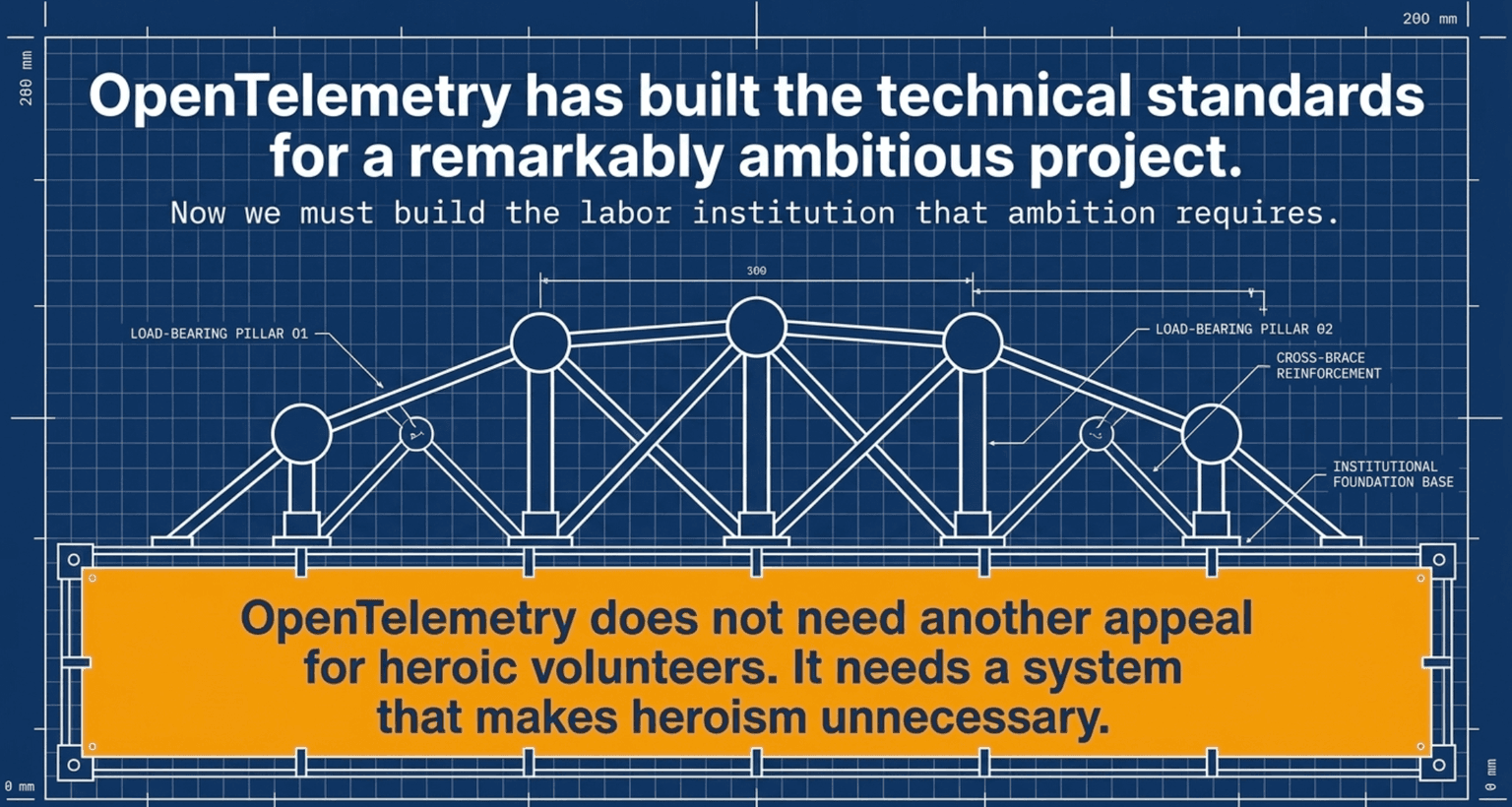
Mat Duggan's August 2026 spreadsheet found that 86% of merges in the OpenTelemetry C++ repository come from a single person, and that the PHP repository has merged 181 pull requests through exactly two people. That isn't a contributor shortage, it's a labor-model problem: the project is underwriting an institutional commitment with individual effort. Here are four fixes, each one already working in another open-source project: a pooled maintainer fund, real apprenticeships instead of contribution drives, support levels that describe capacity honestly, and maintainer-health reviews with a defined response.

Aug 28, 2026

Was That Query Always This Slow? The Query-History Gap in MySQL, SQL Server, and DB2
Blog

Was That Query Always This Slow? The Query-History Gap in MySQL, SQL Server, and DB2

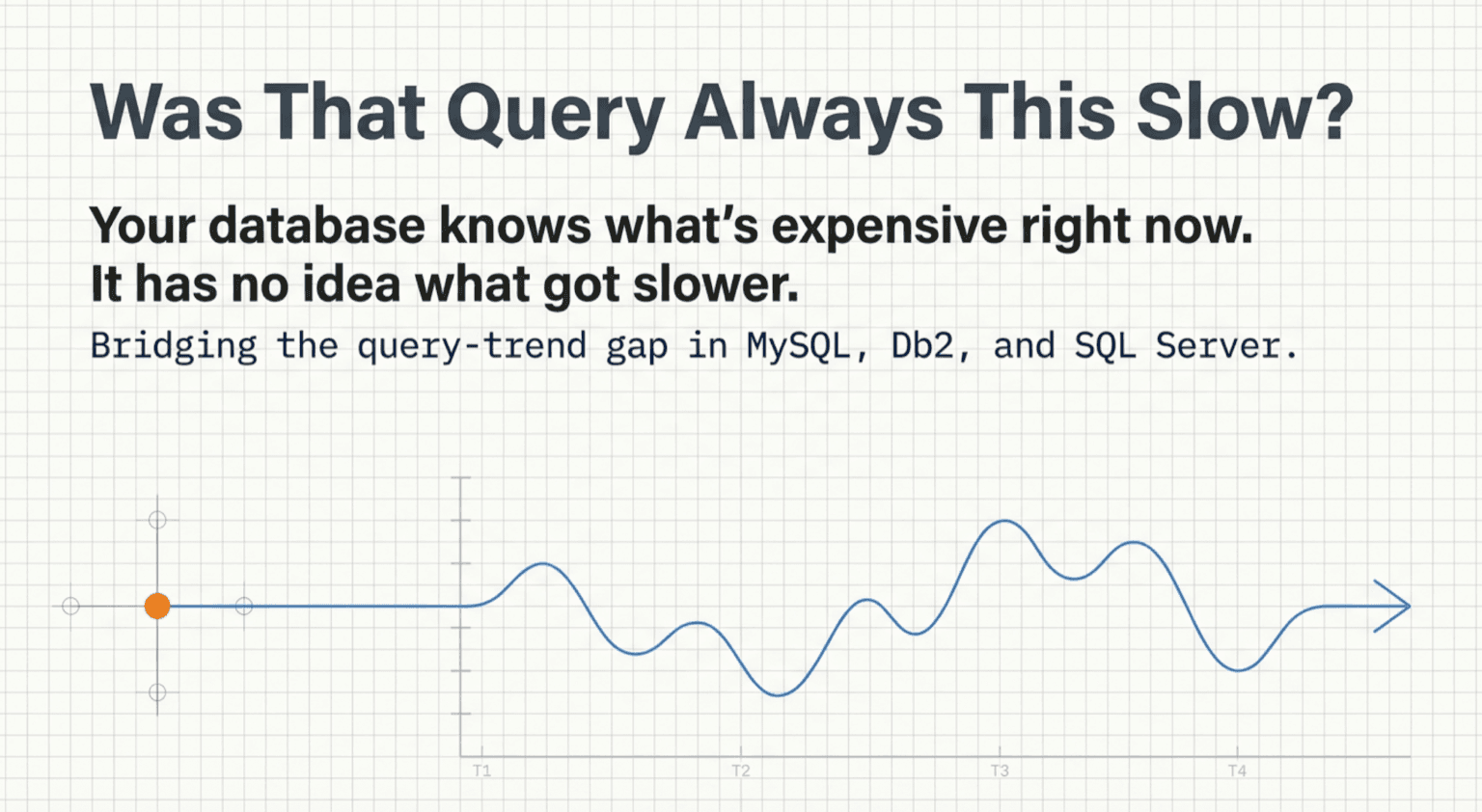
Your database can tell you which queries are slow right now. It usually can't tell you which ones got slower, because the per-query numbers it keeps are a running total with no time axis: reset on restart, or evicted as a cache fills. Here's the query-history gap in MySQL, Microsoft SQL Server, and DB2, why SQL Server is the exception that proves the point, and why the trend belongs in the Oracle Enterprise Manager repository, including the unglamorous work of making the subtraction honest.

Aug 24, 2026

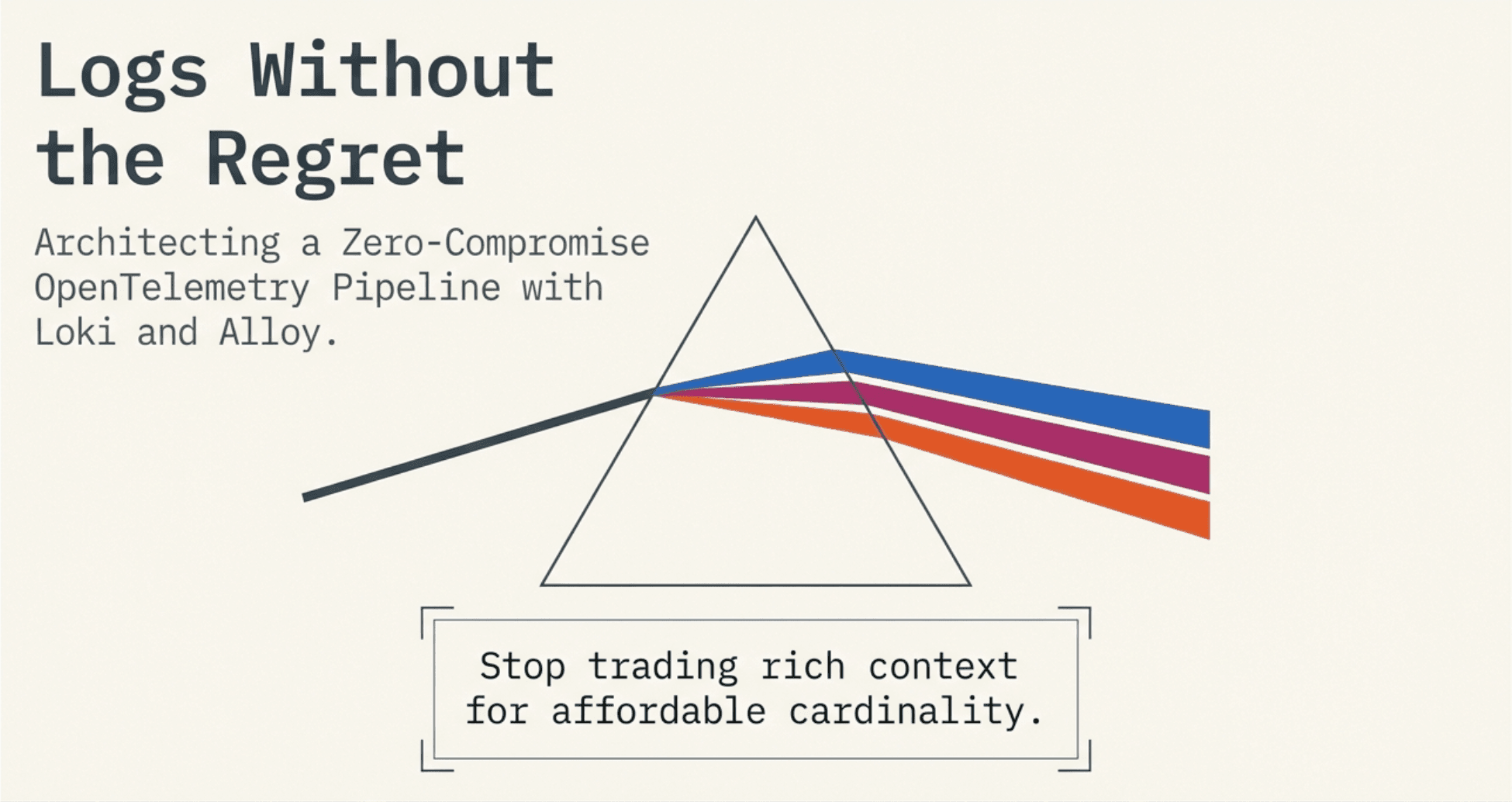
Logs Without the Regret, Part 2: Building the Alloy and Loki Pipeline
Blog

Logs Without the Regret, Part 2: Building the Alloy and Loki Pipeline

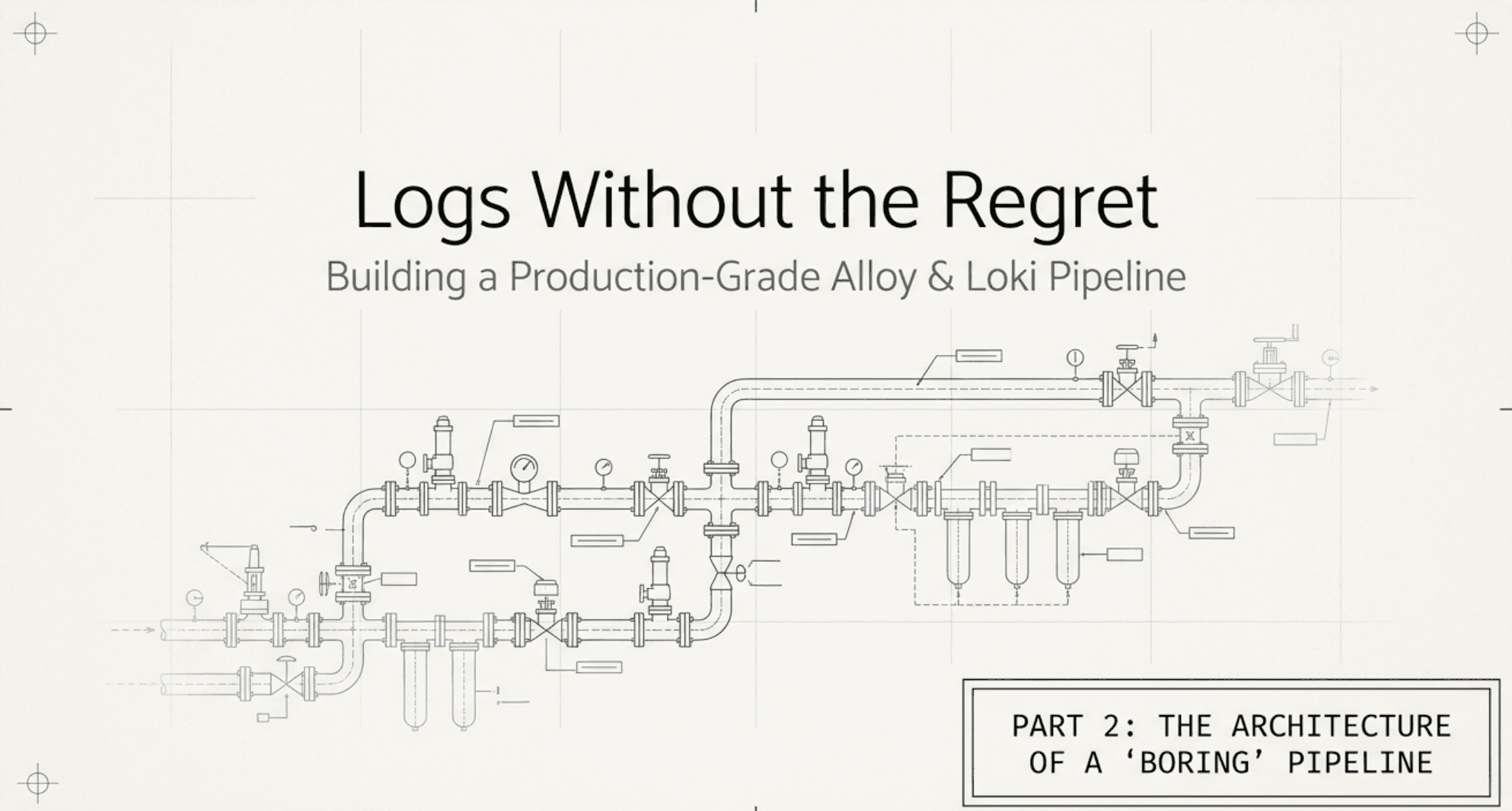
Part 1 made the case that log cost is set at write time by what you index. This is the hands-on half. A production-grade Alloy and Loki pipeline comes down to four decisions: what gets in, what gets rewritten, what gets indexed, and what happens when the backend is unavailable. Here's the three-component minimum that proves the transport works, the OTTL processors that filter and redact in flight, how to set label policy server-side in otlp_config, and the four signals worth alerting on once it is live.

Aug 19, 2026

Least-Privilege by Design: One Read-Only, TLS-First Way to Monitor DB2, SQL Server, and MySQL
Blog

Least-Privilege by Design: One Read-Only, TLS-First Way to Monitor DB2, SQL Server, and MySQL

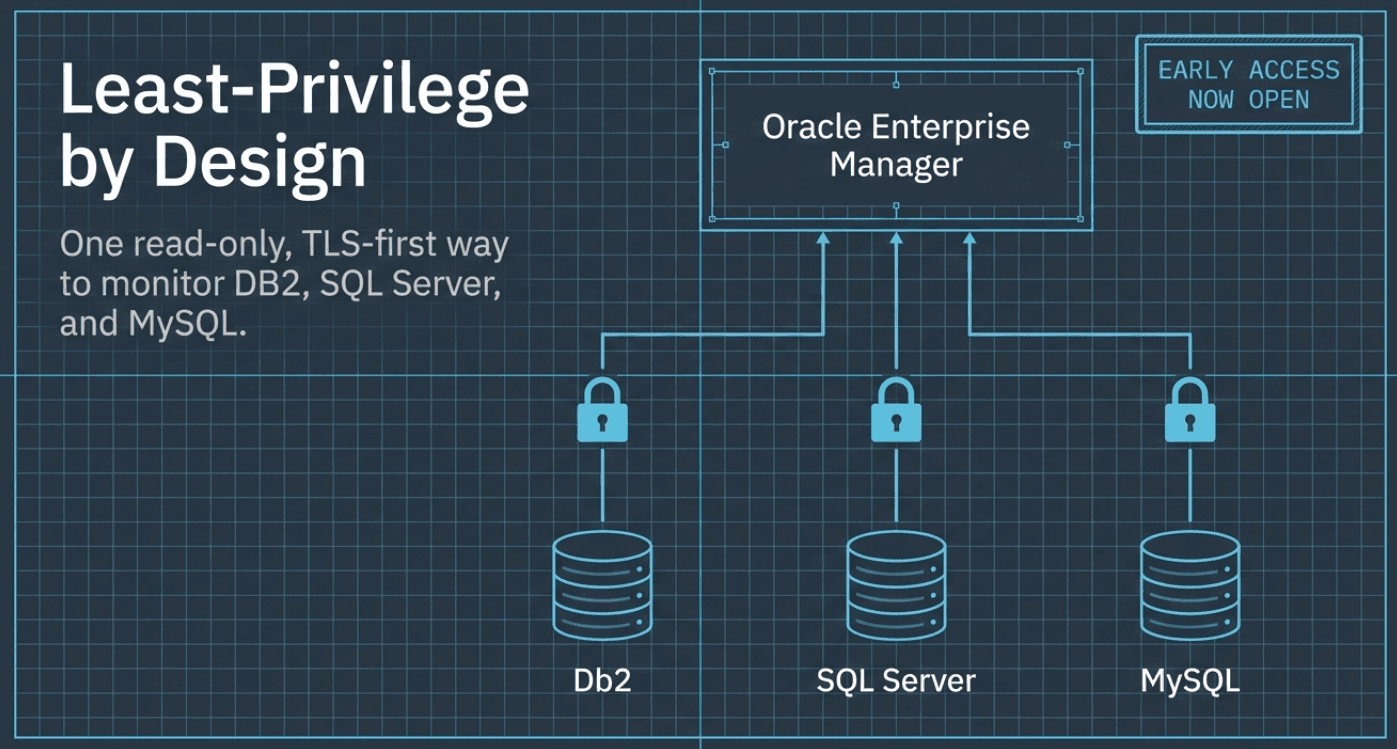
Every database monitoring tool eventually meets the security team, and the answer is usually a broad-privilege account plus an agent installed on the database host. That's a design choice, not a law of nature. Here's the posture shared by all three Integration Plumbers plug-ins for Oracle Enterprise Manager: one read-only grant per engine, an encrypted connection that won't quietly downgrade, your choice of where collection runs, and why that same design reaches a managed cloud database without a rebuild.

Aug 13, 2026

Logs Without the Regret, Part 1: How Loki and Alloy Fit Into OpenTelemetry
Blog

Logs Without the Regret, Part 1: How Loki and Alloy Fit Into OpenTelemetry

Most log pipelines weren't chosen so much as inherited, and the bill nobody can fully explain traces back to a single decision: what you put in the index. Loki's native OTLP endpoint splits log data into a small set of indexed labels and unlimited structured metadata, and Grafana Alloy gives you a server-side place to decide which is which. Here's why traditional pipelines break on cardinality, what the native endpoint actually changes, and where the collector tier still earns its keep.

Aug 3, 2026

Not Sure Where to Start?

Take our free OTEL Maturity Assessment to identify gaps and get a personalized action plan.

Take the Free Assessment