The Enterprise
OpenTelemetry Experts

We help enterprises design, build, and manage vendor-neutral observability — cutting costs, eliminating blind spots, and ending lock-in.

Sound Familiar?

Most enterprises hit the same walls when scaling observability. You're not alone.

Spiraling Costs

Your observability bill grows faster than your infrastructure. Telemetry volume doubles, budgets don't.

Blind Spots at Scale

As your systems grow, telemetry gaps widen. Critical incidents go undetected until customers notice.

Vendor Lock-In

Proprietary agents and formats trap you. Switching vendors means ripping out infrastructure.

Case Study

Real Results for Real Enterprises

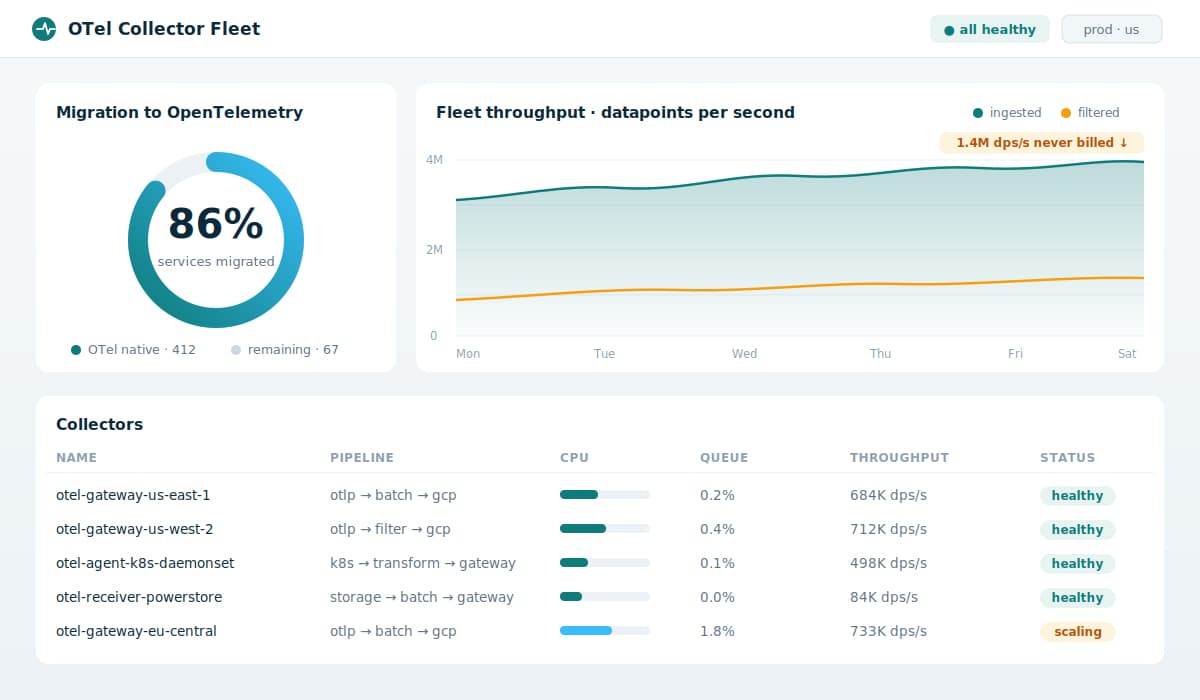
OTel Collector Fleet dashboard showing migration progress, throughput, and collector health
Retail

Cutting Observability Costs by 40% for a Fortune 100 Retailer

A Fortune 100 retailer's observability costs were growing 3x faster than their infrastructure. Multiple vendor agents created duplicate telemetry, and engineering teams had no visibility into what was driving the bill.

  • 40% reduction in annual observability spend
  • Consolidated from 4 vendor agents to 1 OTEL pipeline
  • Real-time cost attribution per team and service
  • Zero gaps in critical alerting coverage
View All Case Studies
40%
Cost Reduction

Trusted by enterprises worldwide

OracleVMwareDellNetApp

Where Does Your Observability Stand?

Take our free 2-minute assessment to benchmark your OpenTelemetry maturity and get personalized recommendations.

Start the Assessment

How We Help

From architecture to ongoing support, we partner with you at every stage of your OpenTelemetry journey.

Why Integration Plumbers?

Enterprise-grade OpenTelemetry consulting, backed by 20+ custom solutions delivered.

Rapid Implementation

Get up and running fast with our proven methodologies and pre-built components.

Customer-First

Your success is our priority. We tailor every solution to your unique needs.

Continuous Innovation

We stay ahead of the curve, bringing you the latest in observability best practices.

Expert Team

20+ enterprise plugins delivered. Deep experience with Oracle, VMware, Dell, and more.

Blog

Latest Insights

Technical deep-dives, practical guides, and lessons learned from real-world observability projects.

Which Index Should You Actually Create? HypoPG, pg_qualstats, and the PostgreSQL Index Advisor

Which Index Should You Actually Create? HypoPG, pg_qualstats, and the PostgreSQL Index Advisor

Most index advice is a hunch with a table name attached: this table gets scanned a lot, so maybe index something on it. The Index Advisor in the August 2026 release of the PostgreSQL Plug-in for Oracle Enterprise Manager replaces the hunch with two kinds of evidence. HypoPG prices a candidate index by planning against it without building it, and pg_qualstats reports the predicates your workload actually ran that no index served. Part one of four on the release's advisory features: how each layer works, where each one stops, why they deliberately disagree, and what it takes to install them.

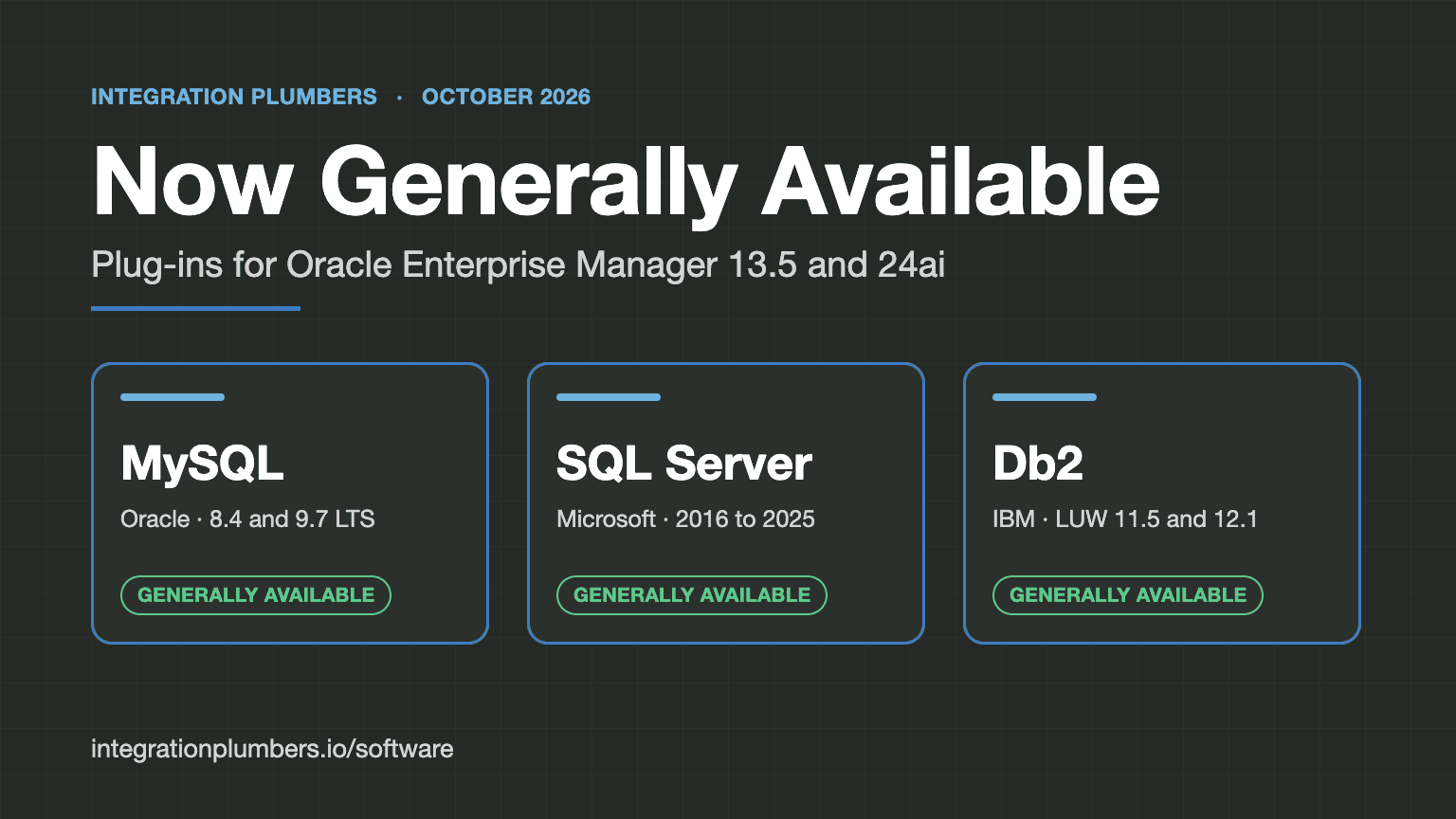
Now in Open Beta: MySQL, SQL Server, and Db2 Plug-ins for Oracle Enterprise Manager

Now in Open Beta: MySQL, SQL Server, and Db2 Plug-ins for Oracle Enterprise Manager

As of September 1, 2026, all three Integration Plumbers database plug-ins for Oracle Enterprise Manager are in Open Beta: MySQL, Microsoft SQL Server, and IBM Db2. Each one makes its engine a first-class target in the console you already run, collects with a read-only account over an encrypted connection, and ships thresholds and compliance rules that work on day one. Here's what each plug-in covers, what Open Beta means in practice, and the four steps to get a license key, install it against your own estate, and tell us what you find before general availability.

OpenTelemetry Doesn't Need More Heroes. It Needs an Institution.

OpenTelemetry Doesn't Need More Heroes. It Needs an Institution.

Mat Duggan's August 2026 spreadsheet found that 86% of merges in the OpenTelemetry C++ repository come from a single person, and that the PHP repository has merged 181 pull requests through exactly two people. That isn't a contributor shortage, it's a labor-model problem: the project is underwriting an institutional commitment with individual effort. Here are four fixes, each one already working in another open-source project: a pooled maintainer fund, real apprenticeships instead of contribution drives, support levels that describe capacity honestly, and maintainer-health reviews with a defined response.

Ready to Transform Your Observability Strategy?

Book a Strategy Call